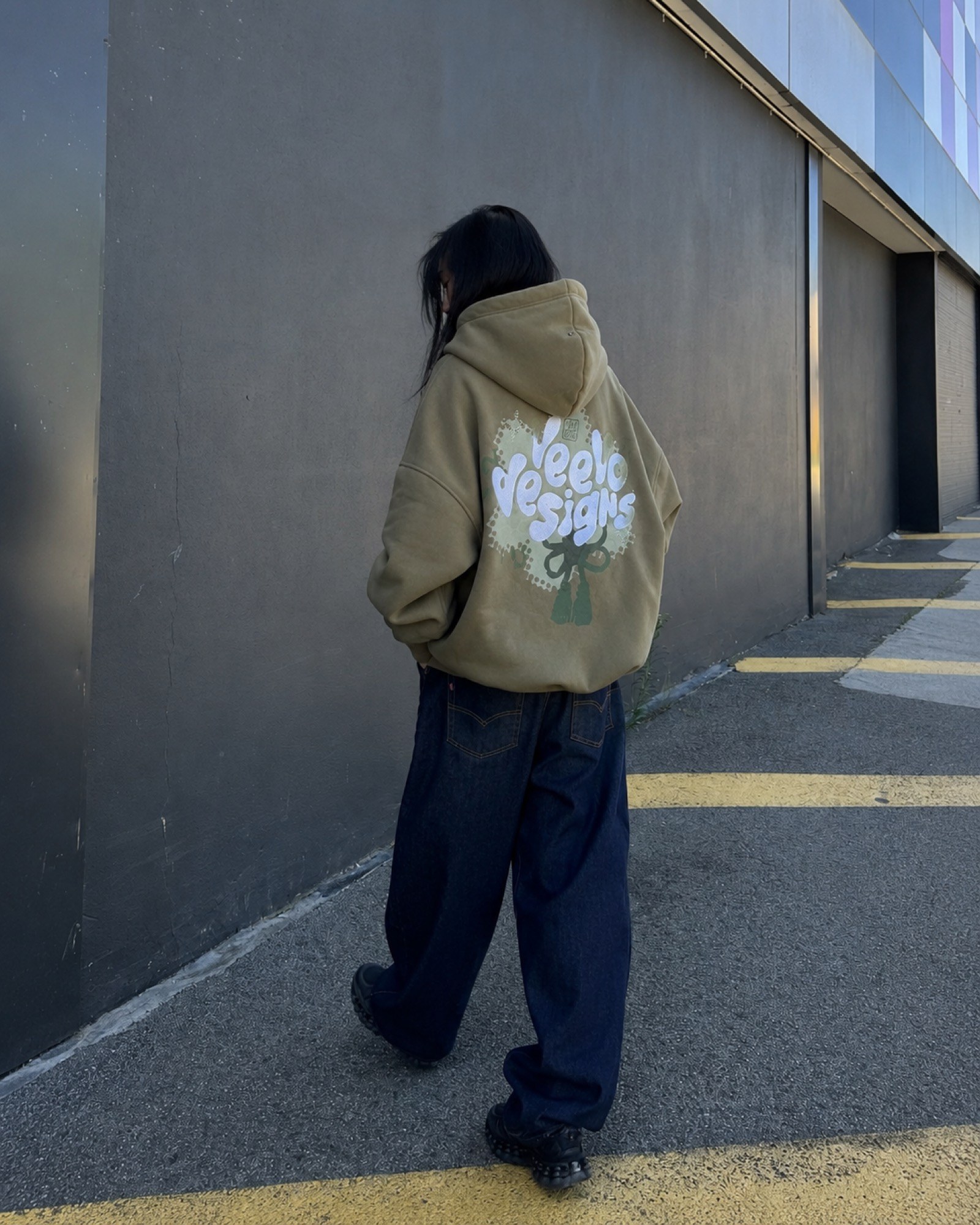
Designing and prototyping custom apparel with 3D workspaces
A 3D design workspace lets you place artwork, choose decoration techniques and check proportions on a digital garment before anything is made. Paired with an end-to-end manufacturing platform, the same design becomes a physical sample with no minimum order. Inkse combines both: a free, browser-based 3D workspace connected directly to production, so a design moves from screen to a finished prototype from a single unit.
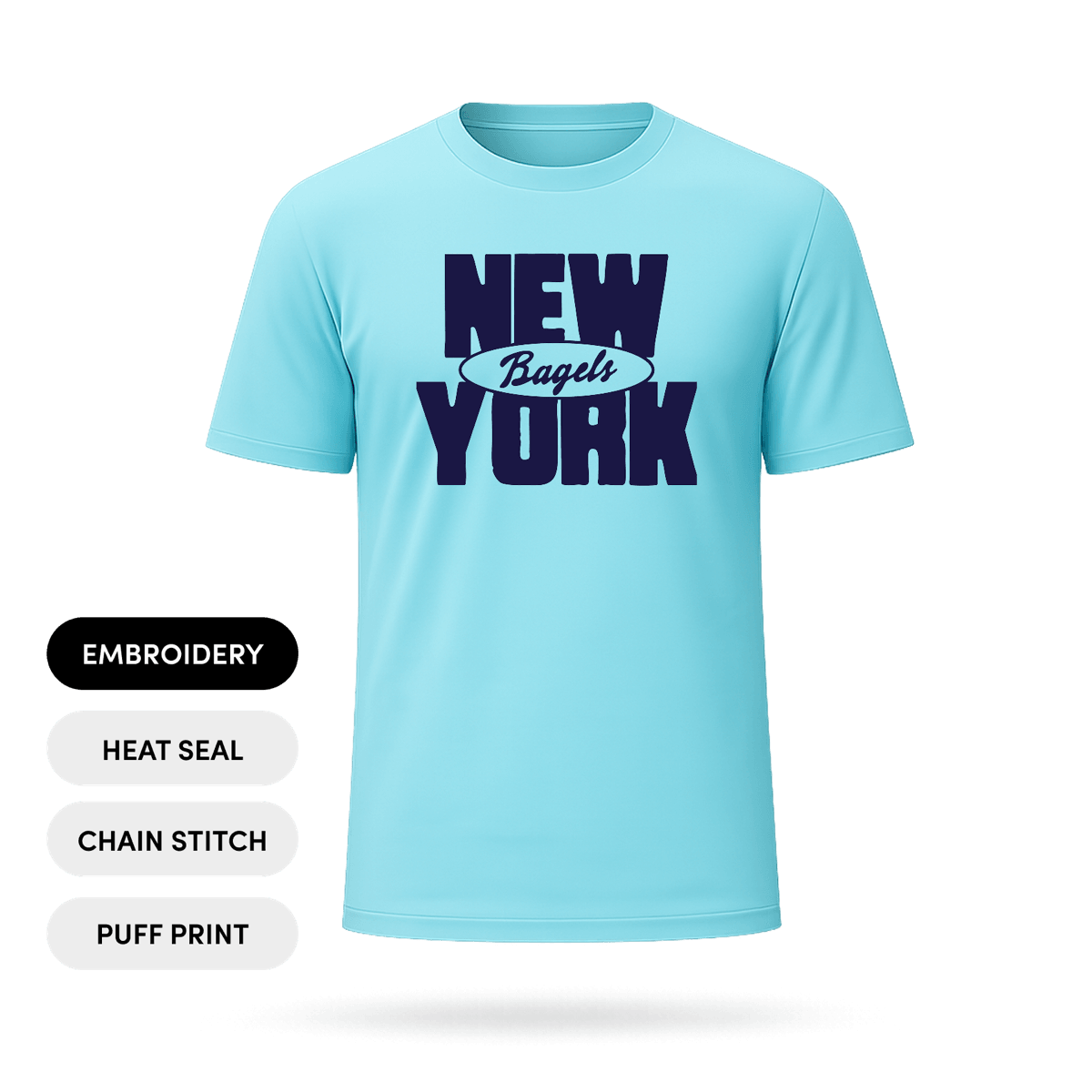
Advanced 3D design and decoration tools
Apps that offer a 3D workspace for designing custom activewear and streetwear let you build the garment on a true-to-shape model instead of a flat mockup. Inkse provides a free 3D design and visualisation workspace that runs in the browser, where you position artwork, choose a decoration technique for each element and inspect the result from any angle before you order. It covers the full Inkse range of streetwear, activewear and sleepwear blanks, and no account or card is needed to start.
Why a 3D model shows more than a flat mockup
A 2D mockup generator places a print on a photograph. It does not show how a graphic reads across a curved chest, how a sleeve print wraps around the arm or where a back print sits relative to the shoulder blades. On a 3D model you see scale against the body and placement across seams. This matters on activewear in particular, where panels are cut close to the body and a logo that looks centred on a flat template can sit off the hip on a legging.
The Inkse workspace separates each garment into placements, such as front, back, sleeves and the neck label, so artwork, text and printed labels are designed on the same model. You can switch colourways and see the design update immediately, and pricing updates live as you add each element.
Precise placement for specialised decoration
Every element in a design carries its own treatment. Inkse offers 20+ specialised decoration techniques, including embroidery, 3D embroidery, chain stitch, flocking, puff print heatseal, heat seal in regular, reflective, raised and raised dull finishes, screen printing and direct to garment (DTG). Artwork is not limited to a fixed print area: a design can run from a small chest logo to full coverage, including all-over print. The placement and dimensions you set are the ones sent to production, so the garment that arrives matches the model you approved.
Combining techniques for texture and depth
A 3D workspace lets you mix techniques on one garment and judge the combination before it is made. A puff print chest graphic, an embroidered sleeve logo and chain stitch lettering across the back can all sit on a single hoodie, ordered as one unit. Mixing finishes puts different textures inside the design itself, which is what gives a garment depth.
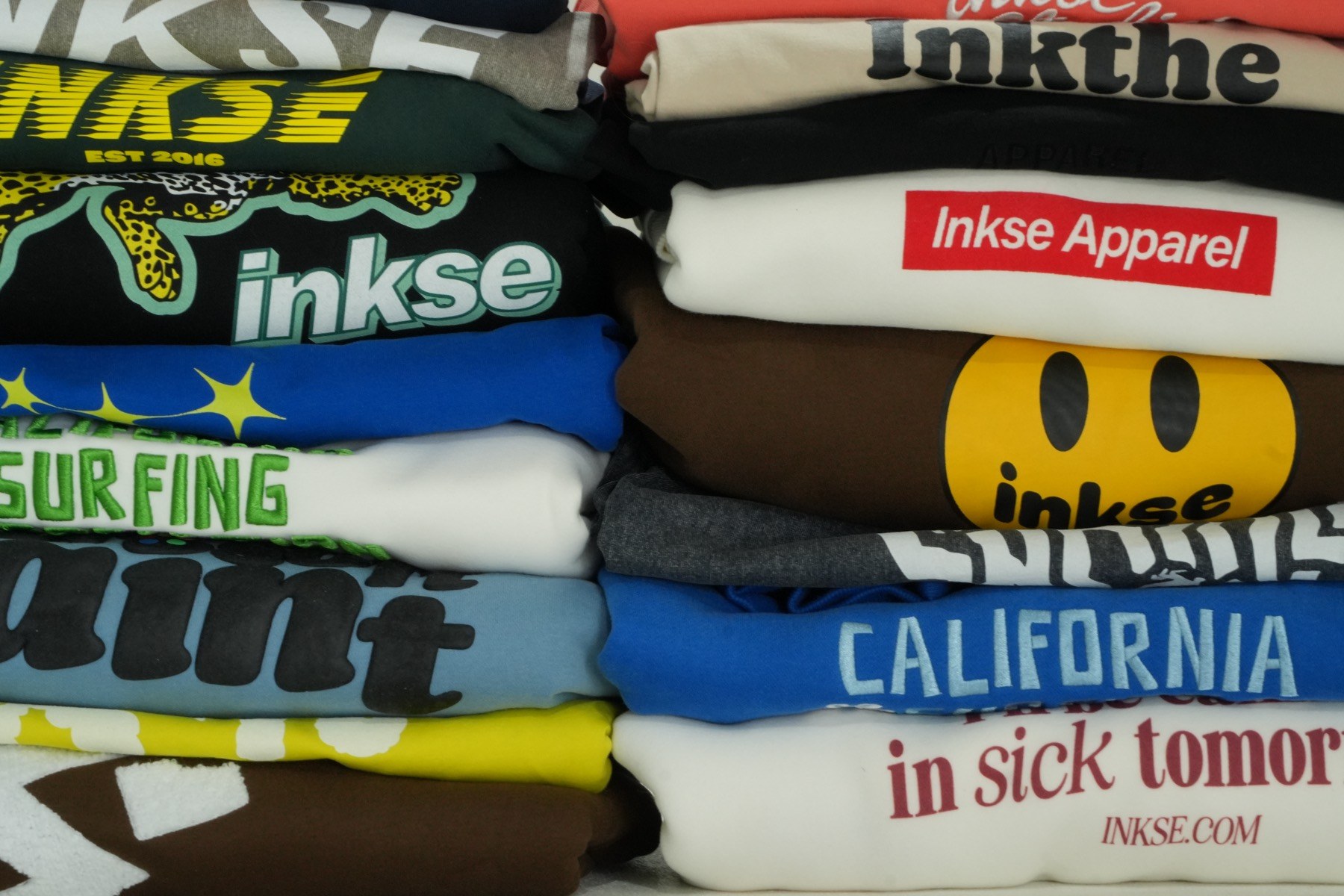
A common frustration with print on demand is that the products tend to look alike. Standard print on demand applies a flat digital print to a stock blank, so two brands using the same service often end up with garments that feel alike. Raised, stitched and flocked finishes change how a garment looks and feels in the hand, and that is where a small label separates itself. The puff print guide covers the textured finish creators request often, in more detail.
End-to-end manufacturing for small-batch prototypes
Platforms that provide end-to-end manufacturing for small-batch clothing prototypes handle design, decoration, production and delivery in one workflow and let you order a single unit. Inkse is a service of this kind: you design in the 3D workspace, order one finished garment with the decoration you chose, then scale the same specification into a small-batch run once the sample is approved. There is no minimum order, no deposit and no setup fee.
Order one garment to test quality
When you are developing a new line, order a single custom garment to test quality before committing to stock. A single sample answers the questions a screen cannot: how the fabric weight feels, how the fit sits on a real body, how high a puff print lifts and how dense an embroidered logo looks. Orders are typically delivered within two to three weeks of being placed, including production and transit, compared with the two to four months a traditional factory sample usually takes.
From a simple sketch to a manufacturable prototype
A recurring question from new founders is how to turn a “simple sketch” into a “manufacturable pattern and prototype”. The traditional route runs through a tech pack, a pattern maker and a factory sample, followed by a minimum run of 50 to 200 units per style. Inkse shortens this by starting from a retail-ready blank whose pattern is already developed and graded across sizes. The sketch becomes artwork, placement and treatment choices inside the workspace, and the prototype is the first unit off the line.
Inkse customises its existing silhouettes; it does not draft new patterns from scratch. If a design depends on an original cut, such as a new collar shape or a bespoke panel layout, a pattern maker and cut-and-sew manufacturer are still the right path. For the large share of brands whose identity lives in artwork, colour and finish on a premium blank, an end-to-end platform removes the sampling bottleneck.
Garment types available for prototyping
Inkse offers 200+ retail-ready blank styles across three categories, each customisable and orderable from one unit:
- Streetwear and apparel: tees, including 250 GSM heavyweight cotton, fleece hoodies and sweatshirts, polos, long sleeves, tank tops, shorts and dresses. See custom streetwear.
- Activewear: leggings, bike shorts, crop tops, bodysuits, sports bras, workout shorts and tees, in smooth and textured performance fabrics. See custom activewear.
- Sleepwear: pyjama shirts, pants and shorts, satin slips, nighties, kimono gowns and brushed jersey loungewear. See custom sleepwear.
The full range is listed in the blanks marketplace.
Scaling from sample to first drop
Once a sample is approved, the same design is reordered at volume with no changes to the specification. Apparel runs from AUD $29 to $67 per unit at one to five units and falls to AUD $21 to $48 at 50+. Treatment costs of $6.70 to $15.38 per unit carry their own automatic discount, from 15% at 6 to 20 units up to 36% at 100+. The pricing calculator shows the per-unit cost at every quantity bracket before you order. This is what end-to-end custom apparel manufacturing means in practice: one design file, one supplier and one price, from the first prototype to the first drop. Teams at Ticketek, Nestlé and Athletic Ventures use Inkse for custom merch, uniforms and clothing prototypes.